LibreOffice Is Making “No AI” a Feature, Putting Privacy First
LibreOffice is taking a different path from software companies racing to integrate artificial intelligence. The open-source office suite plans to keep AI out of its default installation for the foreseeable future, prioritizing user privacy, data control, and independence. Users can still add AI through optional extensions, but the organization says any future built-in integration must meet strict privacy and security requirements.
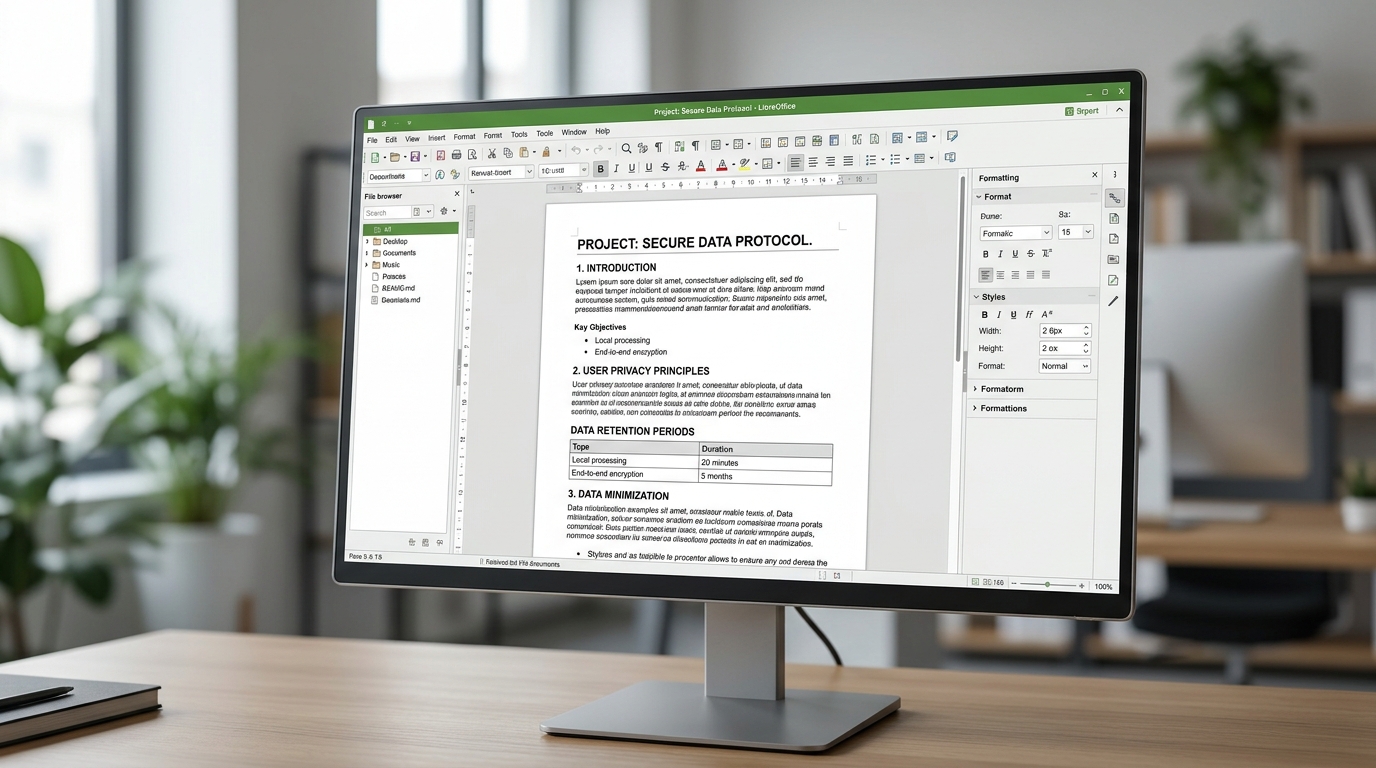
Artificial intelligence is becoming a standard part of modern software. From writing assistants to automated summaries and intelligent search, software companies are increasingly adding AI-powered tools to their products. But LibreOffice is taking a different approach.
The organization behind the open-source office suite has confirmed that it has no plans to include AI features in LibreOffice's default installation for the foreseeable future. Rather than treating the absence of AI as a limitation, The Document Foundation sees it as a deliberate decision that protects user privacy and control.
Why LibreOffice Is Choosing Not to Add AI
The decision comes at a time when many software developers are racing to integrate AI into almost every product they release.
For LibreOffice, however, adding AI is not simply about introducing new features. The organization believes any integration must meet strict requirements before it can become part of the software.
One of its biggest concerns is what happens to users' documents when AI tools are involved.
Many AI services process information through remote servers. Depending on the service and its configuration, documents or other user data may need to leave the device to be analyzed. This can create concerns for people and organizations working with confidential information.
The Document Foundation argues that users should know where their information goes and should remain in control of whether it is shared.
Its position is particularly relevant to institutions such as hospitals, law firms, schools, public agencies, and businesses that regularly handle sensitive records.
The Requirements for Any Future AI Integration
LibreOffice has outlined several conditions that an AI feature would need to satisfy before being considered for its default installation.
First, users must have control over where AI processing happens. They should be able to choose between running models locally, using infrastructure they control, or selecting an independent service.
Second, documents must not leave a user's computer without authorization. The organization also wants to maintain its existing approach to telemetry, meaning AI features should not introduce hidden usage-data collection.
Another requirement is independence from individual AI providers. LibreOffice does not want its users tied to one company's service or API simply because an AI feature has been included in the software.
It also wants any generated content to preserve the Open Document Format and the structure of users' documents.
Finally, AI features must remain optional. Users and administrators should be able to install, remove, or disable them without affecting people who do not want AI in their workflow.
According to the foundation, no currently available integration meets all these requirements well enough for inclusion by default.
Users Can Still Add AI if They Want It
LibreOffice's decision does not mean AI is completely off-limits.
Users who want AI-powered functionality can still install third-party extensions that connect the office suite to AI models. Some of these extensions can work with locally running models through tools such as Ollama and LM Studio.
This provides an alternative for people who want AI assistance while keeping processing on their own devices.
However, these extensions are developed and maintained by their respective authors, not by The Document Foundation. Users and organizations should therefore check how each extension works, whether it connects to a cloud service, and how that service handles information.
The distinction is important: LibreOffice is keeping AI out of its standard installation while leaving the decision to use additional AI tools in the hands of its users.
A Different Approach to the AI Race
The decision also reflects LibreOffice's position as a nonprofit open-source project.
Unlike commercial software providers that may use AI features to support subscriptions, product upgrades, or cloud-based services, The Document Foundation says it is not driven by the same commercial incentives.
That gives the project room to assess whether a new feature genuinely benefits its users before introducing it.
This does not mean LibreOffice considers artificial intelligence unimportant. The foundation acknowledges that AI technology is developing quickly, particularly in the area of locally running models. It says it will continue monitoring the technology and reconsider its position if an integration meets its requirements.
Is No AI Becoming a Competitive Advantage?
As AI becomes more deeply embedded in everyday software, some users are beginning to ask whether every application actually needs an AI assistant.
For people working with private documents, managing confidential business information, or simply preferring traditional software, an application that does not automatically introduce AI features may be an attractive option.
LibreOffice is betting that choice, privacy, and a less complicated user experience still matter.
Its position also raises a wider question for the software industry: should AI be included by default simply because the technology is available, or should users decide when and how they want to use it?
For now, LibreOffice has made its position clear. AI may have a place in the future of the software, but it will not be included by default until it can meet the project's expectations for privacy, independence, and user control.
Google Genie 4 Takes AI World Generation Further With Real-Time Audio and Interactive Scenes
Next Dispatch →Tesla Begins Optimus Robot Production as Profits Fall 43%
Discussion (0)
Technical commentaryLeave a Reply
No comments yet. Be the first to share your thoughts!