Tesla Begins Optimus Robot Production as Profits Fall 43%
Tesla has started early production of its Optimus humanoid robot at its Fremont, California, factory as the company expands its investment in robotics and artificial intelligence. The announcement comes as Tesla reports a 43% year-over-year decline in third-quarter net income. While production marks an important milestone, the robot still requires improvements in safety, durability, and AI capabilities before it can become a dependable commercial product.
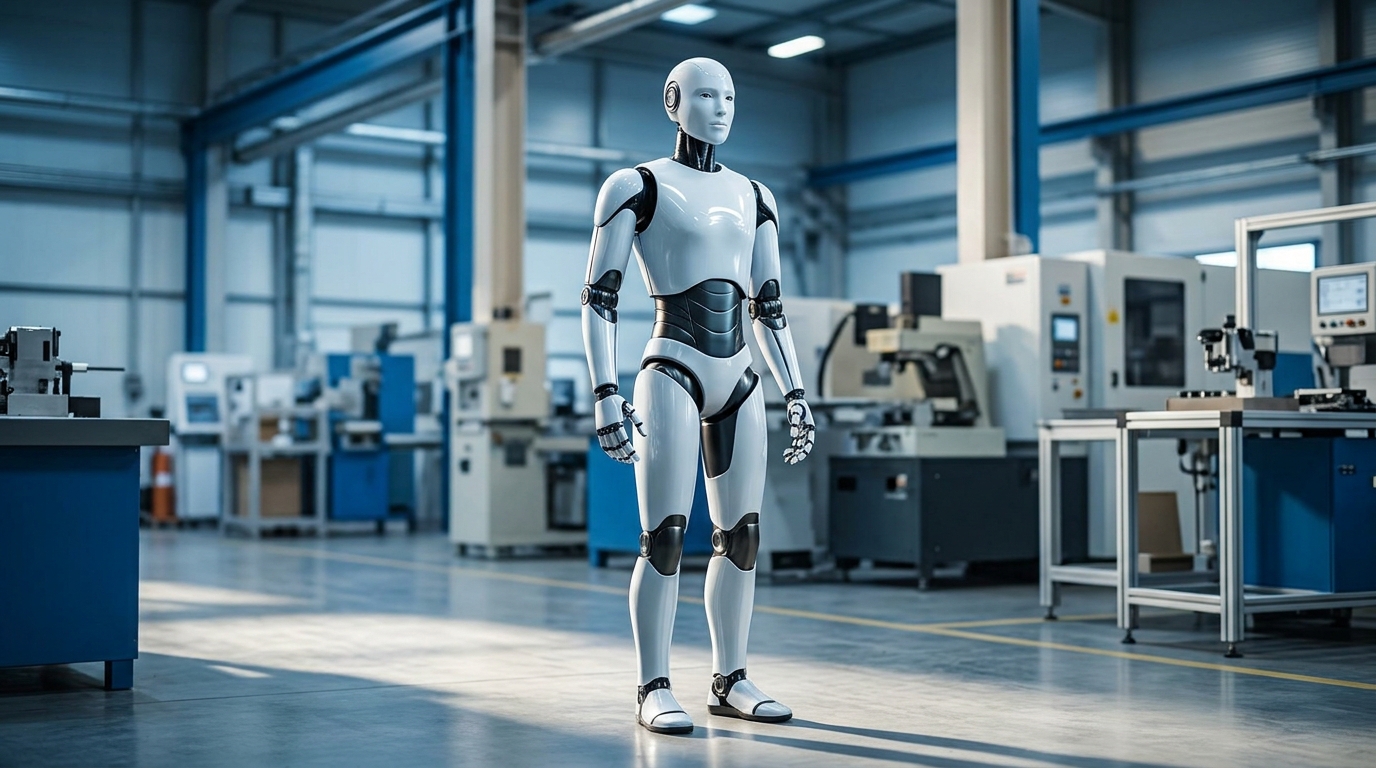
Tesla is taking another step toward its robotics ambitions. The electric vehicle manufacturer has started early production of its Optimus humanoid robot at its Fremont factory in California, marking a significant development in its plans to expand beyond electric vehicles.
However, the announcement comes at a challenging time for the company. Tesla's third-quarter net income fell 43% compared with the same period last year, as increased spending on artificial intelligence, robotics, and autonomous driving weighed on its financial performance.
The development highlights the major bet Tesla is making on its next generation of technology, even as its traditional automotive business faces pressure.
Tesla Starts Producing Optimus in California
Tesla confirmed that Optimus production has begun at its Fremont, California, facility, using manufacturing space previously dedicated to electric vehicle production.
According to the company, the robots coming off the production line are its first production-quality units. Tesla says it has demonstrated that its current manufacturing process is suitable for a commercial product, although the hardware and production process will continue to evolve.
The company is describing the current phase as early production rather than a full-scale manufacturing rollout.
During Tesla's third-quarter earnings call, CEO Elon Musk acknowledged that increasing production will take time. He described the process as potentially challenging because Optimus is a completely new product with technical requirements that still need attention.
Musk has outlined a target of producing 20,000 robots per week by the end of 2027. That remains an ambitious goal, and it will depend on Tesla's ability to improve its manufacturing process and address the remaining engineering challenges.
The Robot Still Needs Significant Development
Although production has started, Optimus is not yet a finished, general-purpose robot capable of reliably handling any task.
Musk acknowledged that Tesla still needs to improve the robot's design, safety, durability, and artificial intelligence capabilities.
These are important requirements for a humanoid robot expected to work in real environments. It must be able to perform tasks consistently, interact safely with people and surroundings, and operate for extended periods without frequent failures.
The software is another major challenge. A robot that can perform a limited set of programmed movements is very different from one that can understand unfamiliar situations and complete a broad range of tasks independently.
Tesla will need to make progress in both hardware and software before Optimus can reach its intended potential.
Tesla's Financial Results Tell Another Story
While the Optimus announcement represents progress in Tesla's robotics plans, the company's latest financial results show the cost of its broader technology ambitions.
Tesla reported third-quarter revenue of approximately $28.04 billion, slightly below the $28.09 billion recorded in the same period of 2025.
Net income fell to $787 million, compared with $1.37 billion a year earlier. That represents a 43% year-over-year decline.
The company's electric vehicle business generated approximately $20 billion in revenue, remaining largely flat compared with the previous year. Tesla delivered 486,532 vehicles during the quarter, fewer than it delivered in the same period last year.
Its solar and energy storage business also experienced pressure, with revenue falling 16% year over year to $2.8 billion. Meanwhile, the services business recorded stronger performance, growing 33% to $4.6 billion in revenue.
Tesla's growing investment in AI, robotics, and autonomous driving is putting additional pressure on profitability as the company develops the infrastructure and technology needed for its future products.
Why Optimus Matters to Tesla's Future
Tesla's interest in humanoid robots goes beyond building another product.
The company sees Optimus as a potential way to automate repetitive, physically demanding, and potentially dangerous work. Manufacturing facilities could become an early environment for testing and deploying these machines.
If the technology develops successfully, the potential applications could extend to warehouses, industrial operations, and eventually some household tasks.
However, these possibilities depend on whether Tesla can develop robots that are safe, dependable, affordable, and capable of operating in environments that are not perfectly controlled.
Starting production is an important manufacturing milestone, but it does not automatically prove that the robot is ready for widespread commercial use.
Tesla Is Also Betting on Autonomous Driving
Optimus is only one part of Tesla's broader investment strategy.
The company continues to develop its Full Self-Driving technology and robotaxi plans. During the earnings call, Tesla executives discussed the possibility of privately owned vehicles eventually joining the company's robotaxi fleet through software updates.
However, the timeline for an unsupervised driving experience has shifted. Tesla's currently available supervised Full Self-Driving system still requires drivers to remain attentive and ready to take control.
The company's ambitions in robotics and autonomous transportation are closely connected through its investment in artificial intelligence and real-world data.
Both projects require substantial engineering work, computing resources, and continued development before they can deliver on their commercial promises.
A Major Technology Bet With More Work Ahead
Tesla's Optimus production launch is an important development in the company's attempt to become more than an electric vehicle manufacturer.
But the road ahead is far from settled. The company must improve the robot's capabilities, establish reliable manufacturing at scale, and demonstrate that there is a sustainable commercial market for humanoid robots.
At the same time, its declining quarterly profit shows that these ambitions are being pursued alongside significant financial pressure.
For now, Tesla has moved Optimus from development into early production. Whether it can turn that progress into a dependable commercial product will be one of the most important developments to watch in the robotics industry.
LibreOffice Is Making “No AI” a Feature, Putting Privacy First
Next Dispatch →Why AI Works Better When Business Systems Work Together
Discussion (1)
Technical commentaryLeave a Reply
Miguelmow
4 days agoСоблюдаем конфиденциальность, бережно общаемся с пациентом и его близкими на каждом этапе. Ознакомиться с деталями - https://narkologicheskaya-klinika-voronezh20.ru/