Singapore Airlines Data Breach: 46,000 Booking Records Affected by Third-Party Cyberattack
A cybersecurity incident involving travel technology provider Amadeus has affected approximately 46,000 Singapore Airlines booking records. Although the airline says its own systems were not breached, the incident highlights the growing risks of third-party data exposure and why businesses must strengthen vendor security, access controls and customer data protection.
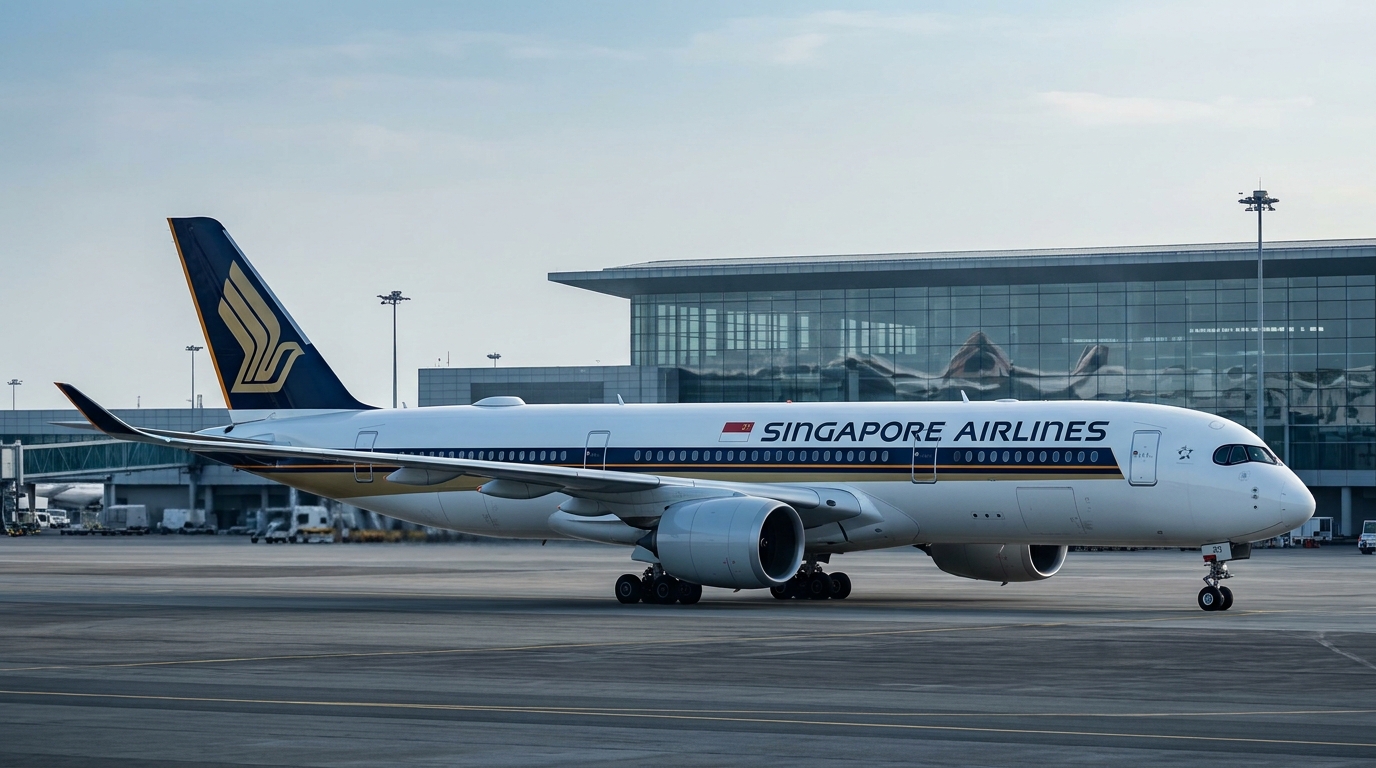
A cybersecurity incident involving one of the world's major travel technology providers has exposed the personal booking information of tens of thousands of Singapore Airlines customers, raising fresh concerns about the security risks associated with third-party service providers.
Singapore Airlines disclosed that approximately 46,000 booking records may have been accessed without authorization through Amadeus, the travel technology company that supports some of its reservation and booking processes.
The incident is particularly significant because Singapore Airlines says its own IT systems were not breached. Instead, the unauthorized access involved customer information stored on the external provider's platform.
The disclosure highlights a growing cybersecurity challenge for organizations that depend on external software providers, cloud platforms and technology partners to manage sensitive business and customer information.
What Happened in the Singapore Airlines Data Breach?
Singapore Airlines confirmed on November 3, 2026, that information relating to approximately 46,000 booking records had been accessed without authorization in an incident involving Amadeus.
The compromised information reportedly included:
- Customer names.
- Booking reference numbers.
- Travel itineraries.
- Booking classes.
For approximately 620 booking records, additional personal information may also have been accessed. This included email addresses, telephone numbers, travel document details and KrisFlyer membership numbers.
The distinction is important. The airline did not report that all 46,000 records contained exposed passport or contact information. Those additional details were potentially involved in a much smaller subset of approximately 620 records.
According to Singapore Airlines, Amadeus confirmed that bank account and credit card information had not been exposed. The incident also did not result in modifications to customer bookings.
As a precaution, Singapore Airlines said it was contacting affected customers with upcoming travel plans to change their booking reference numbers.
The airline also confirmed that its own IT infrastructure had not been breached and said it had informed the relevant authorities.
How Did the Breach Happen?
The incident originated within the technology environment operated by Amadeus, a global travel technology company that provides reservation and other digital services to airlines.
In an October 2026 statement, Amadeus said it had identified a vulnerability affecting a travel booking display environment. The vulnerability made certain booking-display data accessible.
The company said it had implemented measures to fix the vulnerability and strengthened its monitoring and detection capabilities.
Amadeus also stated that its investigations were continuing, that it had found no evidence of payment or financial data being accessed, and that there were no indications the vulnerability had been exploited for ransomware purposes.
The exact technical details of the vulnerability and the complete method used to access the affected information have not been publicly established in the disclosures available at the time of writing.
This distinction matters because it would be misleading to attribute the incident to a particular hacking technique without sufficient evidence.
What is clear is that unauthorized access occurred within a third-party technology environment that handled airline booking information.
Singapore Airlines Is Not the Only Airline Affected
The incident has become more concerning because multiple airlines have reported customer data exposure involving Amadeus.
Among the affected organizations are:
Cathay Pacific: The Hong Kong-based airline reported that approximately 53,000 bookings were affected. It said the unauthorized access involved reservation data in Amadeus' systems.
Japan Airlines: The airline reported that information relating to approximately 92,000 customers had been affected. A smaller subset of around 2,000 customers may have had additional information, including contact details and passport numbers, accessed.
All Nippon Airways: ANA reported approximately 37,800 affected customers. It said additional personal information may have been exposed for around 1,700 customers.
Malaysia Airlines: The airline also reported that some customer information may have been affected and said it was working with Amadeus and relevant parties to investigate the incident.
Other airlines, including Asiana Airlines and Korean Air, have also reported concerns involving customer reservation information.
These disclosures demonstrate how a security weakness within one technology provider can potentially affect multiple organizations that depend on its services.
The affected airlines have issued separate disclosures, and their reported figures should not be treated as a single confirmed total of unique individuals. The extent of exposure differs between organizations.
Why Third-Party Cybersecurity Is a Major Business Risk
For many businesses, cybersecurity is still viewed primarily as a matter of protecting internal computers, servers, websites and company networks.
That approach is no longer sufficient.
Modern organizations depend on a broad ecosystem of external technology providers. These may include cloud hosting companies, payment processors, customer relationship management platforms, email services, accounting applications, booking systems and software development partners.
These providers may have access to sensitive information or operate systems that are essential to everyday business operations.
When a provider experiences a security incident, its customers may also face consequences.
This is known as third-party risk or supply-chain cybersecurity risk.
The Singapore Airlines incident provides a practical example. Even though the airline says its own IT systems were not breached, customer information held by its reservation technology provider was accessed without authorization.
For businesses, the lesson is straightforward: protecting your own infrastructure does not automatically protect information entrusted to external platforms.
How Third-Party Data Breaches Can Affect Businesses
A security incident involving an external provider can create several problems for the organizations that depend on it.
1. Exposure of Customer Information
Businesses often share customer information with external providers to deliver services.
This may include names, contact details, identification documents, account information, purchase histories and other personal records.
If an external platform is compromised, information entrusted to that provider may become accessible to unauthorized parties.
Even when financial information is not exposed, personal information can still be valuable to cybercriminals.
2. Increased Phishing and Impersonation Risks
Information exposed during a data breach can make future scams more convincing.
For example, an attacker who knows a customer's name, travel dates and booking reference may attempt to send a message that appears to come from an airline.
The message could claim that a booking needs urgent confirmation, that a payment must be completed or that additional personal information is required.
Similar techniques can be used against customers of banks, online retailers, healthcare providers and other organizations.
This is why affected customers should be cautious about unexpected messages, suspicious links and requests for sensitive information.
3. Financial and Operational Consequences
A third-party security incident can require an organization to investigate affected systems, notify customers, work with regulators, change access credentials and introduce additional security controls.
Depending on the incident, the business may also face legal expenses, customer support costs, operational disruption and reputational damage.
Even when the external provider is responsible for the technical weakness, the customer-facing organization may still need to manage the consequences.
4. Loss of Customer Trust
Customers expect businesses to handle their information responsibly.
They do not necessarily distinguish between an organization's internal systems and the external platforms it uses.
If personal information is exposed through a service provider, customers may still question whether the organization has taken sufficient steps to protect their data.
Restoring confidence can take considerable time, particularly when the incident affects sensitive information.
What Businesses Can Learn From the Amadeus Incident
The Singapore Airlines case reinforces the importance of treating third-party cybersecurity as a core part of business security planning.
Organizations should not assume that an established technology provider is automatically secure.
Here are several measures businesses should consider.
1. Conduct Security Assessments Before Choosing Vendors
Before adopting an external software platform, evaluate the provider's security practices.
Businesses should ask relevant questions about:
- Data encryption and protection.
- Access control and authentication.
- Security monitoring and incident detection.
- Vulnerability management.
- Security testing and independent assessments.
- Data storage and processing arrangements.
- Incident response procedures.
A vendor's reputation and size should not replace a proper security assessment.
2. Limit the Information Shared With External Providers
Not every technology provider needs access to every piece of customer information.
Organizations should examine what data they share, why it is required and whether the provider can deliver the service with less information.
This follows the principle of data minimization: collect, process and share only what is necessary for a legitimate business purpose.
Reducing unnecessary data exposure can limit the potential impact of a security incident.
3. Review Third-Party Access and Permissions
External providers should receive only the access required to perform their responsibilities.
Businesses should establish clear permission boundaries, review access regularly and revoke permissions that are no longer necessary.
Where appropriate, organizations should also require multi-factor authentication, strong identity verification and additional monitoring for sensitive accounts.
4. Require Clear Incident Notification Procedures
Organizations should understand how quickly a technology provider will notify them when a security incident occurs.
Contracts and service agreements should establish responsibilities for incident reporting, investigation, cooperation, evidence preservation and customer communication.
A business cannot respond effectively to an incident if it does not receive timely and useful information from the provider involved.
5. Develop a Third-Party Incident Response Plan
Cybersecurity planning should account for incidents that originate outside an organization's direct infrastructure.
A practical response plan should explain how the business will:
- Identify which external providers are involved.
- Determine what information may have been affected.
- Restrict or suspend compromised access.
- Work with the provider during investigations.
- Assess customer and operational impact.
- Notify affected individuals and relevant authorities where required.
- Monitor for phishing, impersonation and other follow-on attacks.
Organizations should also test these procedures rather than waiting for a real incident to discover that important responsibilities are unclear.
6. Continuously Monitor Vendor Security
Vendor security is not a one-time exercise.
A provider that meets security requirements today may introduce new systems, change its infrastructure or experience new vulnerabilities later.
Businesses should periodically review vendor security documentation, assess material changes and ensure that important providers maintain appropriate security controls.
Critical suppliers may require more frequent assessments than providers with limited access to company information.
What Affected Customers Should Do
Although Singapore Airlines says payment card and bank account information was not exposed, affected customers should still take reasonable precautions.
Customers who receive an official notification should follow the airline's instructions and verify that communications are genuine.
They should also:
- Be cautious of unexpected messages referencing their travel bookings.
- Avoid clicking links in suspicious emails or text messages.
- Never share passwords, one-time verification codes or payment details in response to unsolicited requests.
- Check booking information through the airline's official website or verified customer support channels.
- Watch for suspicious calls or messages claiming to represent Singapore Airlines.
- Contact the airline directly if they receive an unusual request involving their reservation.
The exposure of booking details does not automatically mean that an account or payment method has been compromised. However, criminals can use personal information to make impersonation attempts more believable.
The Bigger Lesson: Your Cybersecurity Is Only as Strong as the Systems You Depend On
The Singapore Airlines incident is another reminder that cybersecurity responsibilities extend beyond an organization's own network.
Businesses increasingly depend on external providers to store information, process transactions, manage customer relationships and deliver essential services.
These relationships create operational efficiencies, but they also introduce security risks that must be identified and managed.
A company may have firewalls, endpoint protection, secure internal networks and trained employees, yet still face exposure through a poorly secured external platform.
This is why cybersecurity strategies need to include vendor assessments, access management, data minimization, continuous monitoring and incident response planning.
For business leaders, the question should no longer be limited to whether their own systems are secure.
They should also ask: Who else has access to our data, how securely is that information handled, and what happens if one of those providers is compromised?
The organizations that take these questions seriously will be better positioned to protect their customers, reduce operational risk and maintain trust in an increasingly connected digital environment.
Why Your Business Needs More Than Paid Ads: The Importance of Brand Marketing
Next Dispatch →AI Coding Agents Put 12 JavaScript Frameworks to the Test. Here's What Won
Discussion (0)
Technical commentaryLeave a Reply
No comments yet. Be the first to share your thoughts!