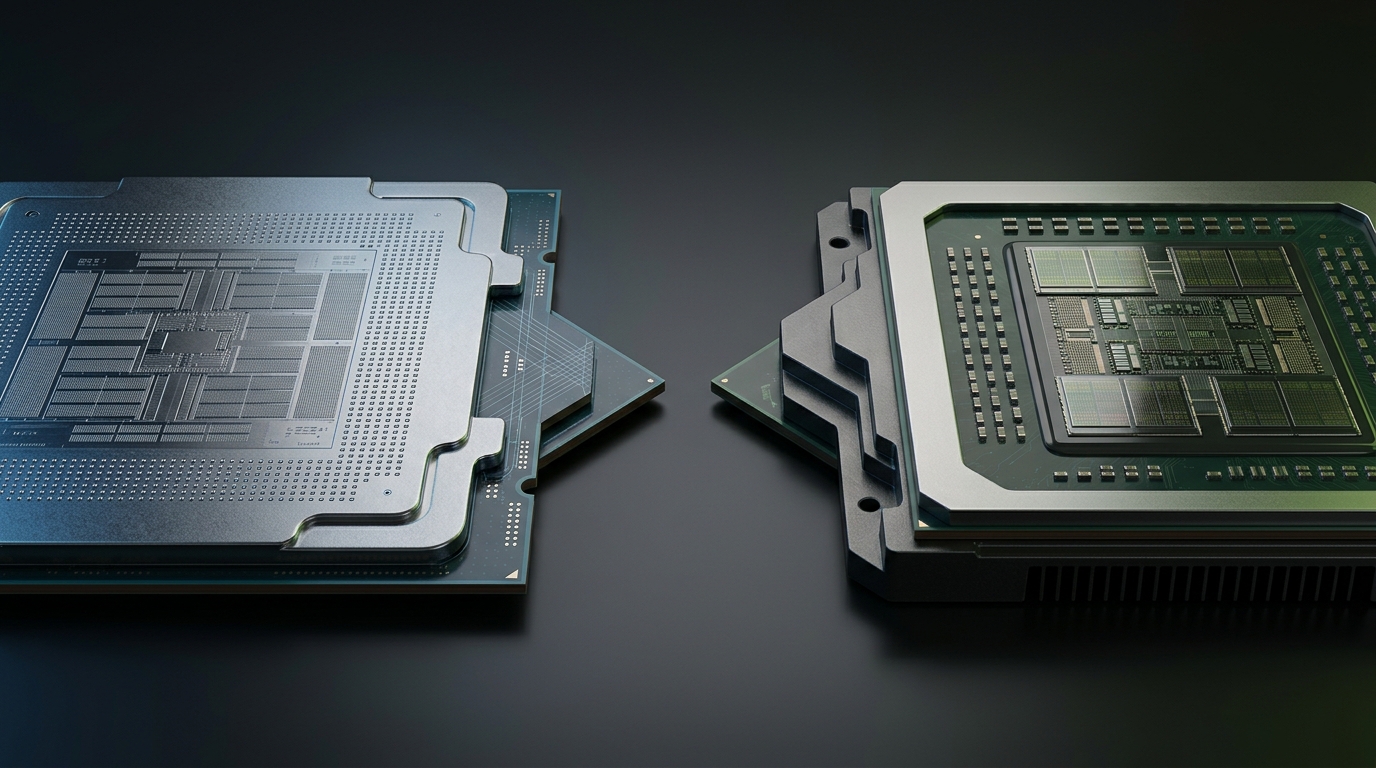
A $59.7 Million AI Supercomputer Is Listed on eBay With 9,600 NVIDIA GPUs
A technology reseller has listed a 300-rack AI supercomputer on eBay for $59.7 million. The advertised system includes 9,600 NVIDIA A100 GPUs, 4,200 AMD EPYC processors, and approximately 1.4 petabytes of system memory. The unusual listing highlights the growing demand for AI computing infrastructure and the emerging market for used data-center hardware.
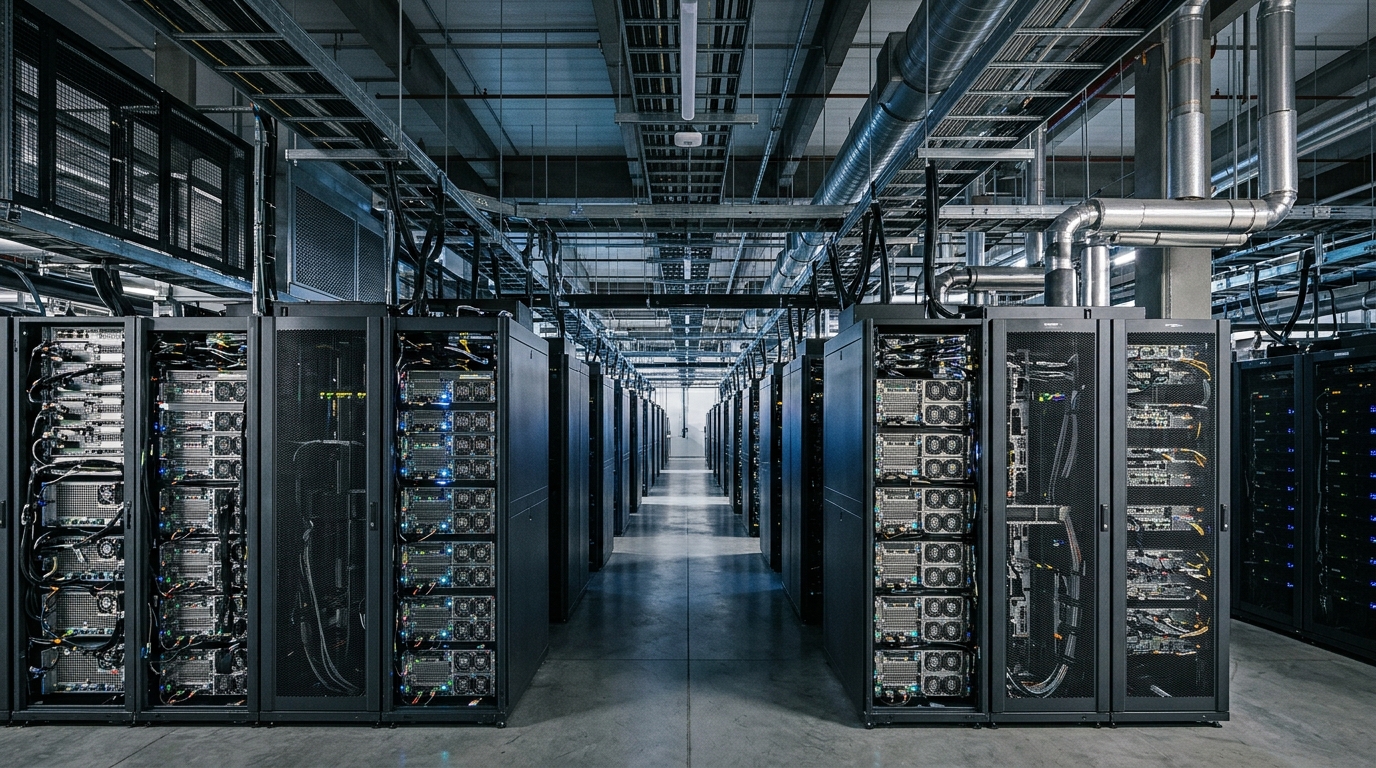
Rows of enterprise server racks representing a 300-rack AI supercomputer listed for $59.7 million with 9,600 NVIDIA A100 GPUs.
Buying an artificial intelligence supercomputer usually involves enterprise hardware suppliers, specialized infrastructure providers, and substantial procurement budgets. But one technology reseller has taken an unusual approach to selling an enormous AI computing installation: listing it on eBay for $59.7 million.
The listing, reported by TechRadar on November 4, 2026, comes from Core 4 Solutions, a Minnesota-based IT hardware supplier offering a 300-rack computing cluster containing up to 9,600 NVIDIA A100 graphics processing units (GPUs) and 4,200 AMD EPYC Rome processors.
The asking price is extraordinary, but the advertised delivery options are even more unusual. The seller reportedly offers free FedEx Ground shipping, with two-day delivery for $25 and overnight delivery for $50.
Behind the unusual marketplace listing is a much bigger story about the growing demand for AI computing infrastructure, the secondary market for data-center hardware, and the economics of operating large-scale artificial intelligence systems.
Inside the $59.7 million AI supercomputer
According to the advertised specifications, the installation consists of 300 server racks designed to operate as a large-scale computing cluster.
Each rack contains four compute nodes, with every node equipped with eight NVIDIA A100 40GB SXM4 accelerators and two 64-core AMD EPYC Rome processors.
The compute nodes also include 1TB of DDR4-2933 memory, networking equipment, and additional supporting hardware.
Three management nodes are included in each rack. These systems are equipped with additional AMD EPYC processors and memory to support the administration of the cluster.
Across the advertised installation, the specifications add up to:
- 300 server racks.
- Up to 9,600 NVIDIA A100 40GB GPUs.
- 4,200 AMD EPYC Rome processors.
- Approximately 268,800 CPU cores.
- Around 1.4 petabytes of system memory.
- Approximately 384TB of GPU memory.
The configuration also includes NVIDIA Mellanox ConnectX-6 networking hardware, power systems, and other infrastructure required to connect and operate the computing equipment.
These are figures from the seller's advertised specifications and reporting on the listing. They have not been independently audited as a complete operational installation.
Why NVIDIA A100 GPUs still matter
Although the supercomputer contains thousands of GPUs, the hardware is not based on NVIDIA's latest architecture.
The A100 belongs to NVIDIA's Ampere generation, introduced in 2020. It was an important accelerator for AI training, machine learning, scientific computing, and high-performance data processing.
Newer NVIDIA architectures, including Blackwell, have since arrived with more advanced capabilities and performance improvements.
The AMD EPYC Rome processors also belong to an older hardware generation, preceding newer EPYC platforms.
However, older does not automatically mean useless.
A100 accelerators remain capable of supporting many AI workloads, particularly inference, model development, and other computing tasks that do not require the newest generation of accelerators.
For organizations with appropriate infrastructure, a large installation of established hardware could offer an alternative to purchasing newer systems at substantially higher prices.
The challenge is determining whether the performance, energy consumption, maintenance requirements, and software compatibility make the investment worthwhile.
Why is the supercomputer priced at nearly $60 million?
Core 4 Solutions is asking $59.7 million for the entire installation.
An analysis of the major components cited by Tom's Hardware places their estimated combined value at approximately $28.1 million.
That estimate includes:
- Approximately $24 million for the NVIDIA A100 GPUs.
- Around $3 million for the AMD EPYC processors.
- Approximately $1.1 million for the memory.
However, this calculation does not account for the full value of the installation's supporting infrastructure, including server racks, networking equipment, cooling systems, power supplies, and other components.
It is therefore important not to treat the $28.1 million estimate as a complete valuation of the supercomputer.
The asking price also reflects the seller's valuation of the assembled equipment as a large computing installation rather than simply a collection of individual processors and graphics cards.
At $59.7 million, the asking price works out to approximately $199,000 per rack.
That is a substantial investment for any organization, especially considering that the equipment is from an older hardware generation.
The unusual $50 overnight shipping offer
One of the most entertaining details of the listing is its advertised delivery arrangement.
For a transaction involving 300 server racks and equipment worth tens of millions of dollars, the seller reportedly offers free FedEx Ground delivery or collection at no additional charge.
Customers seeking faster delivery can reportedly select two-day shipping for $25 or overnight delivery for $50.
The delivery prices have attracted attention because they are so unusual when compared with the scale of the equipment being sold.
In practice, transporting and receiving 300 server racks would require considerable logistical planning, appropriate handling arrangements, and a suitable destination.
A buyer would also need to prepare the receiving facility before the equipment could be installed and operated.
The seller's advertised shipping options should not be confused with the complete cost of deploying the supercomputer.
The growing secondary market for AI hardware
The listing also highlights an important development in the AI industry: older data-center hardware is finding a second life as large technology companies upgrade their infrastructure.
AI companies and cloud providers regularly invest in newer accelerators to improve computing performance and efficiency.
As these organizations upgrade, older equipment can become available through resellers and secondary hardware markets.
For smaller AI companies, research institutions, universities, and organizations with limited infrastructure budgets, used enterprise hardware may offer an alternative to purchasing the latest equipment.
However, acquiring a large number of GPUs is only one part of building an AI computing facility.
Organizations must also consider electricity requirements, cooling capacity, networking, physical space, software compatibility, and ongoing maintenance.
A supercomputer can represent an attractive hardware investment on paper while becoming extremely expensive to operate in practice.
Could older GPUs still support modern AI development?
The NVIDIA A100 remains relevant to several areas of artificial intelligence development.
Depending on the workload and software configuration, these GPUs can support machine learning experiments, AI inference, scientific research, data processing, and certain model-training tasks.
A large cluster can also provide substantial parallel computing capacity, allowing workloads to be distributed across multiple accelerators.
Nevertheless, performance depends on more than the total number of GPUs.
Memory capacity, communication between accelerators, storage performance, networking bandwidth, software optimization, and power efficiency all influence the capabilities of a computing cluster.
Organizations considering older GPUs must compare the total cost of ownership against the performance and operational advantages of newer hardware or cloud-based computing services.
Has anyone bought the $59.7 million supercomputer?
Despite the attention surrounding the listing, there is no confirmed evidence that the entire installation has been sold for the advertised amount.
TechRadar reported that the listing had attracted 11 watchers and that one prospective buyer had added it to an eBay shopping cart.
Those figures indicate marketplace interest, but they do not establish that negotiations have taken place or that a transaction has been completed.
A purchase of this scale would also require substantial due diligence.
Potential buyers would need to verify the equipment's condition, confirm the advertised specifications, assess power consumption, check software compatibility, and establish whether the required cooling and networking infrastructure is available.
For an investment approaching $60 million, those checks would be essential before any commitment.
What this means for the AI infrastructure market
The $59.7 million listing illustrates how much computing power the AI industry now demands and how quickly the market for specialized hardware is evolving.
The newest accelerators attract enormous investment, but older generations of enterprise GPUs can still hold considerable value when deployed for suitable workloads.
At the same time, the secondary market gives organizations another route to acquiring computing infrastructure without necessarily purchasing every component new.
For businesses exploring AI development, the important question is not simply how many GPUs they can acquire. It is whether the entire computing environment can deliver the performance, reliability, and operating costs required by their applications.
The unusual eBay listing may be remembered for its $59.7 million asking price and $50 overnight shipping option. More importantly, it provides a glimpse into the enormous scale of modern AI infrastructure and the growing market for previously deployed computing hardware.
HP, Asus and Acer Shift PC Production Back to China as AI Costs Rise
Next Dispatch →Russia Orders Apple and Microsoft to Retain User Messages for Three Years
Discussion (0)
Technical commentaryLeave a Reply
No comments yet. Be the first to share your thoughts!