China Blocks SoftBank's $5.4 Billion ABB Robotics Deal: What It Means for the Future of AI
China has blocked SoftBank's planned $5.4 billion acquisition of ABB's robotics business in China, creating a setback for its physical AI ambitions. Discover why the decision matters for industrial robotics, AI development and international technology investment.
China has blocked a major part of SoftBank's planned $5.4 billion acquisition of ABB's robotics business, creating a significant setback for the Japanese investment group's ambitions in artificial intelligence and industrial automation.
The decision, reported on November 5, 2026, concerns the proposed acquisition of ABB's robotics operations in China. ABB confirmed that it had been informed by SoftBank that Chinese regulators had prohibited the acquisition of its robotics business in the country.
The development puts pressure on a transaction that SoftBank had announced in October 2025 as part of its strategy to expand into robotics and what the industry increasingly calls physical AI: artificial intelligence integrated into machines, robots and real-world industrial systems.
The deal was intended to bring ABB's established robotics technology and manufacturing expertise into SoftBank's broader AI investment strategy. However, the Chinese decision introduces a major regulatory obstacle because China is one of the most important markets for ABB's robotics business.
The situation also highlights a growing challenge for international technology companies. As robotics and AI become strategically important industries, governments are paying closer attention to who controls advanced manufacturing capabilities, industrial data and technology developed within their borders.
What Happened to the SoftBank and ABB Robotics Deal?
SoftBank agreed to acquire ABB's robotics division in October 2025 for an enterprise value of $5.375 billion.
The proposed transaction was intended to combine ABB's established industrial robotics business with SoftBank's investments and ambitions in artificial intelligence, robotics and next-generation computing.
However, the acquisition required regulatory approval in several jurisdictions, including China.
On November 5, 2026, ABB confirmed that it had been informed that China's Office of the Working Mechanism for Foreign Investment Security Review had prohibited the acquisition of the ABB Robotics business in China.
This is an important distinction: ABB's announcement specifically identifies the Chinese robotics business. It does not establish that the entire worldwide transaction has been formally terminated.
ABB also said that it and SoftBank remain in close dialogue and are working constructively on the transaction.
The companies have not announced a final alternative arrangement or confirmed whether a revised transaction could receive approval.
The decision is nevertheless a major setback because the Chinese operations were an important part of the business SoftBank wanted to acquire.
Why Is China Blocking the Acquisition?
The regulatory decision has attracted attention because of the strategic importance of industrial robotics and the information generated by automated manufacturing systems.
According to reporting by the Financial Times, Chinese authorities were concerned about the possibility of robotics-related data being transferred outside China and potentially used to train artificial intelligence models.
The report also described scrutiny of ABB's Chinese supply chains, manufacturing capabilities and intellectual property.
These concerns reportedly formed part of China's foreign-investment security review.
However, there is an important qualification.
ABB's public statement confirmed the prohibition but did not provide an official explanation for the decision. The reported concerns about robotics data and AI training came from people familiar with the regulatory process, as reported by the Financial Times. They should not be presented as an officially confirmed explanation from the Chinese government.
The distinction matters because the decision could involve several overlapping issues, including national security, industrial data, intellectual property, manufacturing capacity and the strategic value of robotics technology.
China's Foreign Ministry also directed questions about the matter to the relevant authorities rather than providing a detailed public explanation. Why ABB's Robotics Business Is So Important to China
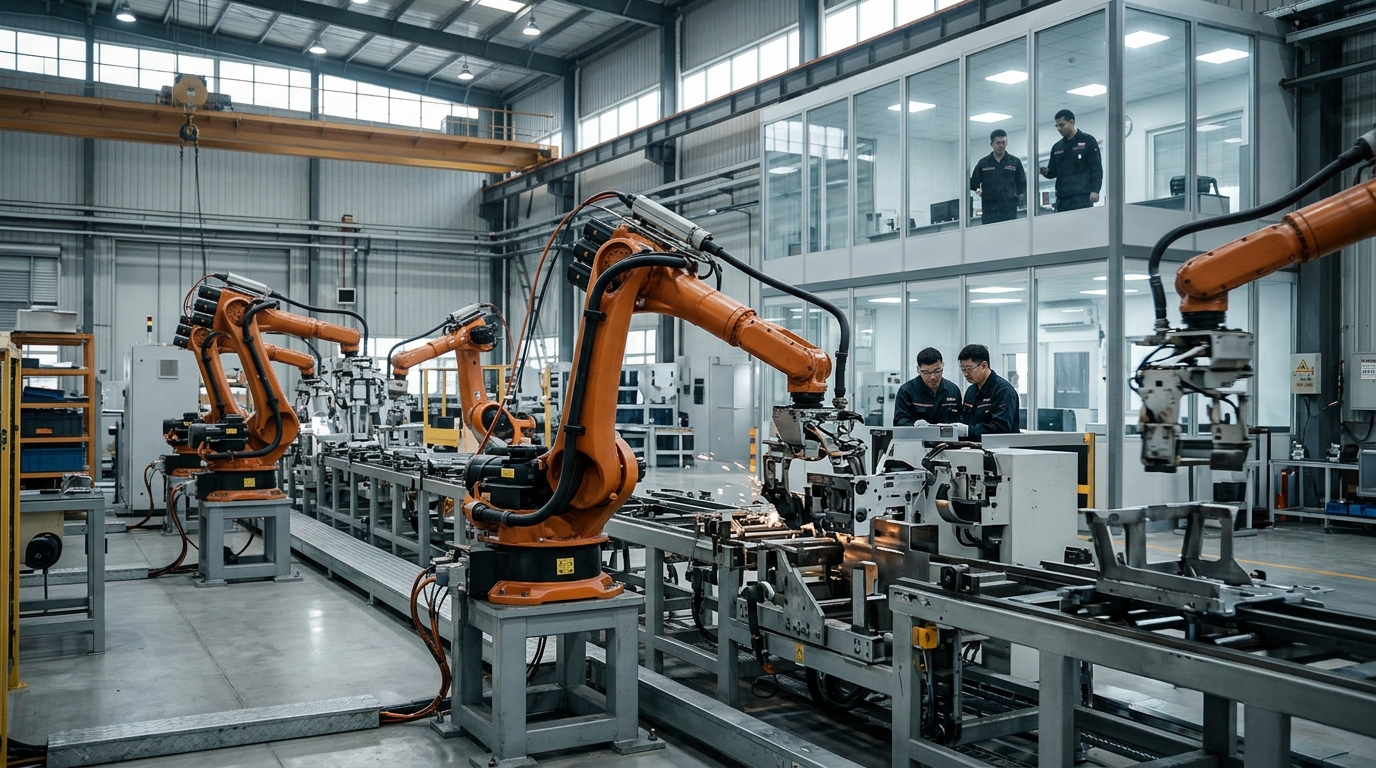
ABB is a major global supplier of industrial automation and robotics technology.
Its robotics business provides equipment and solutions used in manufacturing, logistics and other industrial environments. These systems help businesses automate repetitive tasks, improve production efficiency and handle complex manufacturing processes.
China is particularly important to this business.
According to reporting by the Financial Times, China is the largest market for ABB's robotics division. More than 90% of the robots supplied to Chinese customers are manufactured locally, and ABB employs approximately 12,700 people in the country.
The company also operates major research and manufacturing facilities in China, including a robotics factory in Shanghai.
These operations make the Chinese business more than just a sales market. They represent a significant manufacturing, research and industrial footprint.
For a foreign buyer, acquiring this business would mean gaining access to an established robotics operation with substantial local capabilities.
For Chinese regulators, the same factors could make the transaction strategically sensitive.
The question is not simply who owns the company. It is also where important technology is developed, where industrial data is stored, who controls manufacturing operations and whether valuable technical knowledge can move across national borders.
Why SoftBank Wanted ABB's Robotics Business
The acquisition was an important part of SoftBank founder Masayoshi Son's ambition to expand beyond conventional software and AI investments.
SoftBank has made artificial intelligence a central part of its long-term investment strategy. However, the company is also interested in how AI can be applied outside computers and digital services.
This is where industrial robotics becomes important.
Traditional industrial robots are designed to perform specific physical tasks, such as welding, assembling components, moving materials and packaging products.
AI creates opportunities to make these systems more adaptable.
Instead of relying entirely on fixed instructions, AI-powered robots could increasingly interpret their environments, respond to changing conditions and perform more complicated tasks.
This broader direction is often described as physical AI.
It includes technologies such as:
- Intelligent industrial robots.
- Autonomous warehouse systems.
- AI-powered manufacturing equipment.
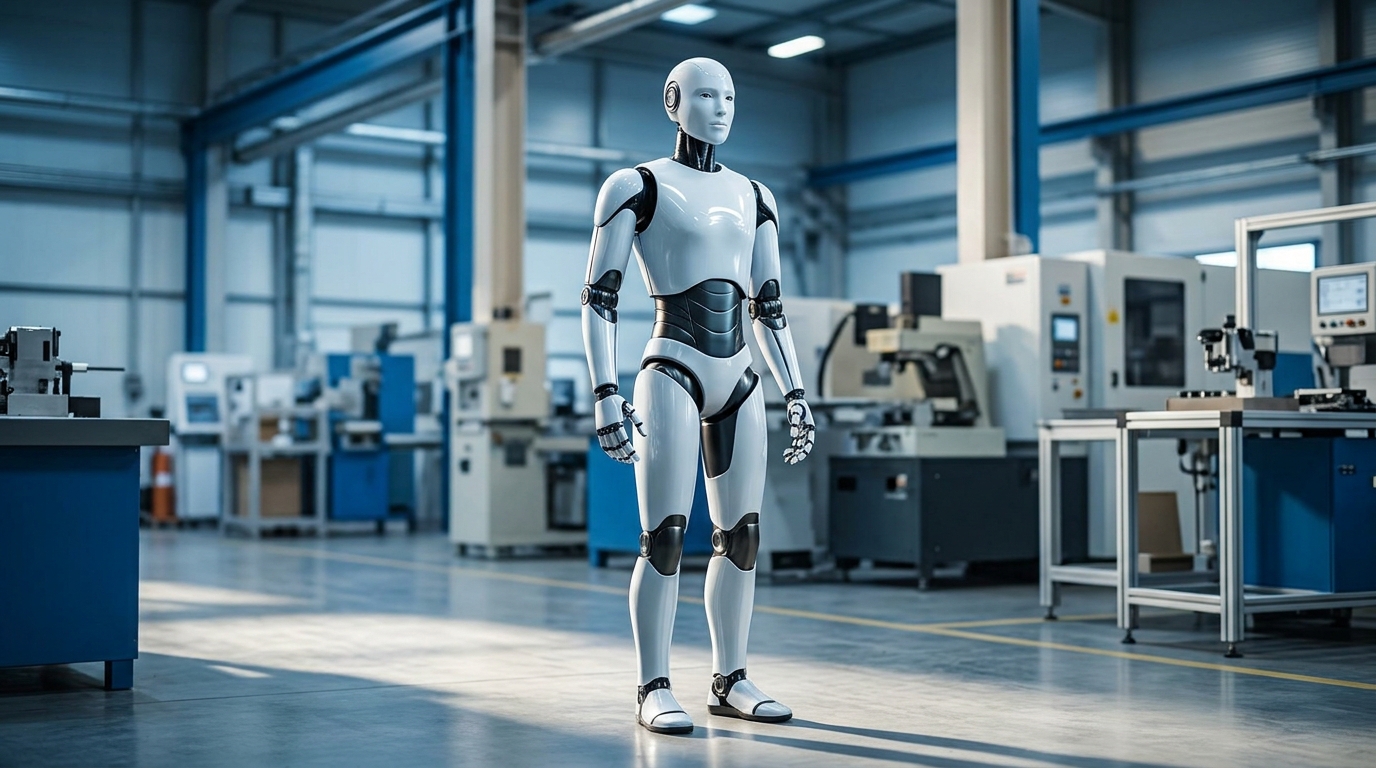
- Humanoid robots.
- Autonomous machines used in logistics.
- Robotic systems capable of interpreting real-world environments.
ABB's robotics business offered SoftBank an established industrial platform with existing customers, engineering expertise and manufacturing capabilities.
Rather than building an industrial robotics business entirely from the beginning, SoftBank could have acquired an existing operation and connected its capabilities with its wider AI ambitions.
The transaction was therefore about more than buying robotic arms and factory equipment. It was also an attempt to strengthen SoftBank's position in the emerging physical AI market.
The Growing Importance of Physical AI
Much of the AI industry's attention has focused on chatbots, image generation, coding assistants and large language models.
But another important area of development is emerging: AI systems that interact with the physical world.
Physical AI combines artificial intelligence with hardware that can sense, understand and respond to real-world environments.
For example, an AI-powered industrial robot could potentially identify different objects, adjust its movements and respond to unexpected changes on a production line.
In logistics, autonomous machines could help transport goods through warehouses. In manufacturing, intelligent robots could assist with quality inspection, assembly and material handling.
These applications could eventually change how factories, distribution centres and other industrial facilities operate.
However, physical AI is not simply software running on a computer.
It requires specialised hardware, sensors, robotics engineering, manufacturing expertise, safety systems and access to real-world operating data.
That makes established robotics companies valuable to technology investors.
SoftBank's interest in ABB reflects this opportunity. The acquisition could have given the company an established industrial foundation for its wider AI ambitions.
China's decision demonstrates that access to these capabilities may increasingly depend on national regulatory priorities, not just the financial value of a transaction.
What the Decision Means for SoftBank
The immediate consequence is uncertainty around a transaction that SoftBank considered strategically important.
The acquisition was expected to strengthen the company's presence in industrial robotics and provide an established platform for its physical AI ambitions.
The Chinese prohibition creates a problem because the country's operations were an important part of ABB's robotics business.
SoftBank must now assess its options and determine whether the transaction can be restructured, whether additional regulatory discussions are possible or whether it needs to reconsider its plans.
The setback also highlights the difficulty of executing major international acquisitions in strategically sensitive technology industries.
Even when a buyer and seller agree on a price, the transaction may still depend on approvals from multiple governments.
SoftBank has not publicly disclosed a final alternative arrangement for the deal.
The situation is therefore still developing, and it would be premature to assume that the entire transaction has permanently collapsed.
What This Means for ABB
ABB had planned to divest its robotics division as part of a broader corporate strategy.
When it announced the agreement in October 2025, the company said the transaction carried an enterprise value of $5.375 billion.
The proposed sale was also a change from ABB's earlier intention to separate the robotics business through a public listing.
The proceeds were expected to provide ABB with additional financial flexibility for its capital-allocation plans.
The regulatory obstacle in China creates uncertainty around that strategy.
The company has not announced that the entire sale agreement has been cancelled. Its public statement instead says that it remains in close dialogue with SoftBank and that both parties are working constructively on the transaction.
A revised structure or another arrangement could be considered, but no specific alternative has been confirmed.
The situation also raises a broader question for international industrial companies: how easily can businesses with significant operations in China be separated, sold or transferred to foreign buyers?
That question could influence future investment decisions across robotics, automation and other strategically important industries.
A Wider Warning for International Technology Acquisitions
The SoftBank and ABB situation is part of a wider pattern of increasing regulatory attention toward foreign acquisitions involving strategic technology.
In April 2026, China also intervened in Meta's acquisition of AI startup Manus, ordering the parties to unwind the transaction.
The two cases involve different companies and technologies, but both demonstrate the importance of regulatory approval when foreign investment involves businesses that authorities consider strategically sensitive.
For international technology companies, this creates a more complicated acquisition environment.
A transaction may be commercially attractive and receive approval in some jurisdictions while facing restrictions elsewhere.
This is especially relevant to industries involving:
- Artificial intelligence and advanced computing.
- Industrial robotics and automation.
- Semiconductor manufacturing.
- Telecommunications infrastructure.
- Sensitive industrial and consumer data.
- Advanced manufacturing technologies.
The implications extend beyond China.
Governments around the world are increasingly evaluating how technology ownership, data access and supply-chain control affect national security and economic competitiveness.
For businesses planning international acquisitions, regulatory strategy is becoming just as important as financing, valuation and commercial due diligence.
Could This Slow the Development of AI-Powered Robotics?
The decision does not mean that the global robotics industry will stop developing.
However, it highlights some of the challenges that could influence how quickly companies expand internationally.
AI-powered robotics requires collaboration between software developers, hardware manufacturers, research institutions and industrial operators.
Companies also need access to manufacturing facilities, technical expertise and real-world data to improve their systems.
If governments become more restrictive about transferring these capabilities across borders, international partnerships and acquisitions could become harder to complete.
This may encourage companies to develop more self-contained supply chains and local manufacturing capabilities.
It could also increase investment in domestic robotics research and production.
At the same time, regulatory uncertainty may make some investors more cautious about acquiring businesses with substantial operations in strategically sensitive markets.
The long-term effect will depend on how governments balance national security concerns with international investment and technology collaboration.
What Happens Next?
For now, the most important question is whether SoftBank and ABB can find a way to proceed with the proposed transaction despite the Chinese regulatory decision.
ABB has confirmed that the Chinese robotics business cannot be acquired under the decision communicated to it. However, the companies have not announced that their entire global agreement has been terminated.
SoftBank will need to evaluate its options, while ABB must consider how the development affects its planned divestment.
Investors and technology companies will also be watching for further clarification about the regulatory concerns behind the decision.
The outcome could influence how future acquisitions involving industrial robotics, AI infrastructure and sensitive technology are structured.
The bigger story is that robotics is no longer just a manufacturing business. It is becoming a strategic part of the global AI economy.
As artificial intelligence moves from digital platforms into factories, warehouses and physical machines, control over robotics technology and industrial data is likely to attract even greater attention from governments.
SoftBank's proposed acquisition of ABB's robotics business shows just how complicated that transition could become.
Frequently Asked Questions
1. Why did China block SoftBank's ABB robotics acquisition?
ABB confirmed that Chinese regulators prohibited the acquisition of its robotics business in China. Reports by the Financial Times said authorities were concerned about robotics data being transferred overseas and potentially used to train AI models. ABB did not publicly confirm that explanation.
2. How much was SoftBank paying for ABB's robotics division?
The proposed transaction had an enterprise value of $5.375 billion, according to the original announcements from ABB and SoftBank in October 2025.
3. Has the entire ABB and SoftBank deal been cancelled?
Not necessarily. ABB confirmed that the acquisition of its robotics business in China was prohibited. It also said both companies remain in close dialogue and are working constructively on the transaction. A final outcome for the wider agreement has not been announced.
4. What is physical AI?
Physical AI refers to artificial intelligence used in machines and systems that interact with the real world. Examples include industrial robots, autonomous machines, intelligent manufacturing equipment and humanoid robots.
5. Why is ABB's robotics business important?
ABB is a major industrial robotics supplier. Its technology is used in manufacturing, logistics and automation. Its established engineering capabilities, customer relationships and production facilities made the business attractive to SoftBank.
6. What does the decision mean for the future of AI robotics?
It highlights how national security, industrial data and technology ownership can affect international robotics investment. It does not stop AI robotics development, but it may make some cross-border acquisitions and partnerships more difficult.
7. What is SoftBank trying to achieve with AI and robotics?
SoftBank founder Masayoshi Son has positioned AI and robotics as important parts of the company's long-term technology strategy. The proposed ABB acquisition was intended to strengthen its industrial robotics capabilities and support its ambitions in physical AI.
Final Takeaway
China's decision to block the acquisition of ABB's robotics business in the country is a major development for SoftBank and the global robotics industry.
It demonstrates that the future of AI will not be determined by software companies alone. Robotics manufacturers, industrial data, manufacturing infrastructure and national technology policies will also play important roles.
As AI moves deeper into the physical world, controlling the technology behind intelligent machines could become one of the most important areas of global competition.
Discussion (0)
Technical commentaryLeave a Reply
No comments yet. Be the first to share your thoughts!