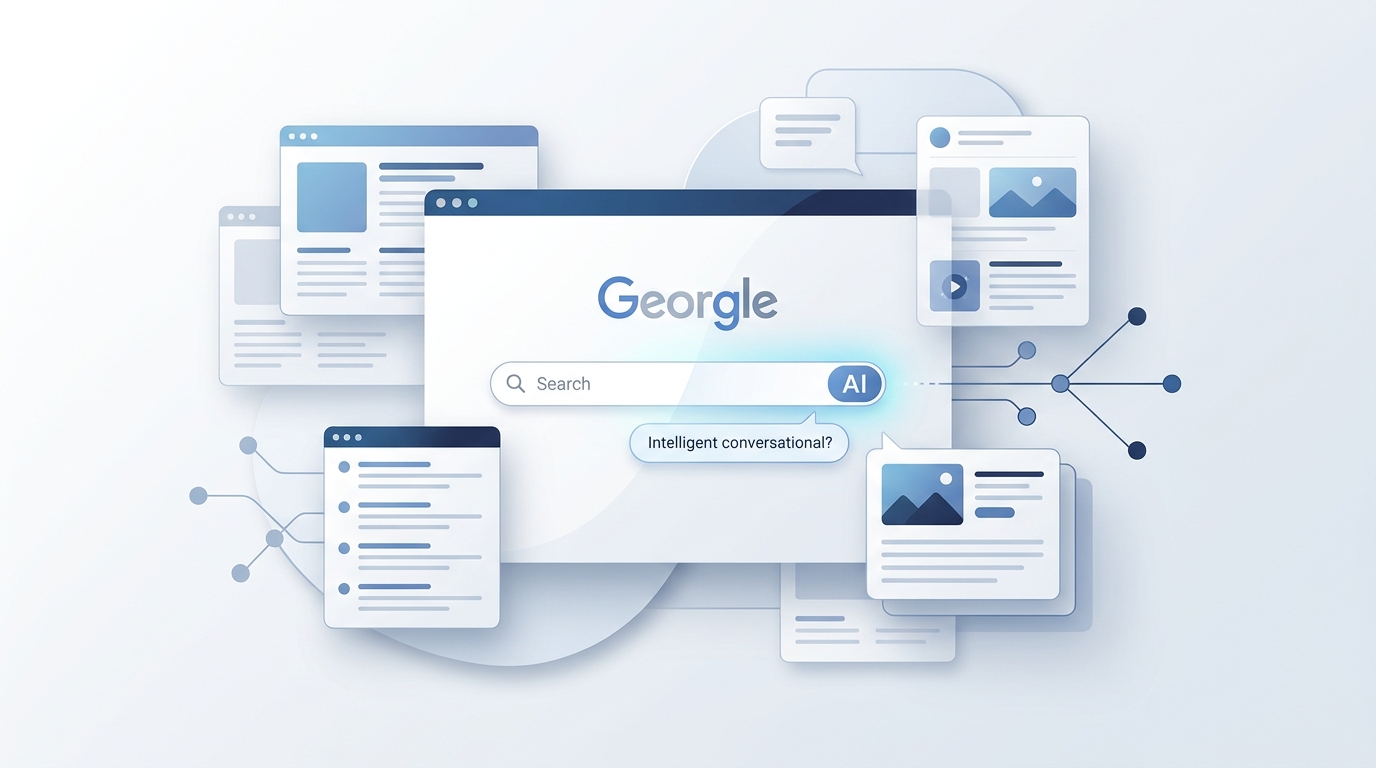
AI Is Changing Digital Advertising: 6 Marketing Trends Businesses Should Watch in 2026
AI is transforming digital advertising, from automated campaign management and conversational AI ads to creator partnerships and new video formats. Explore six important marketing trends shaping 2026 and learn how businesses can use emerging technologies, better data and smarter advertising strategies to reach customers and improve campaign performance.
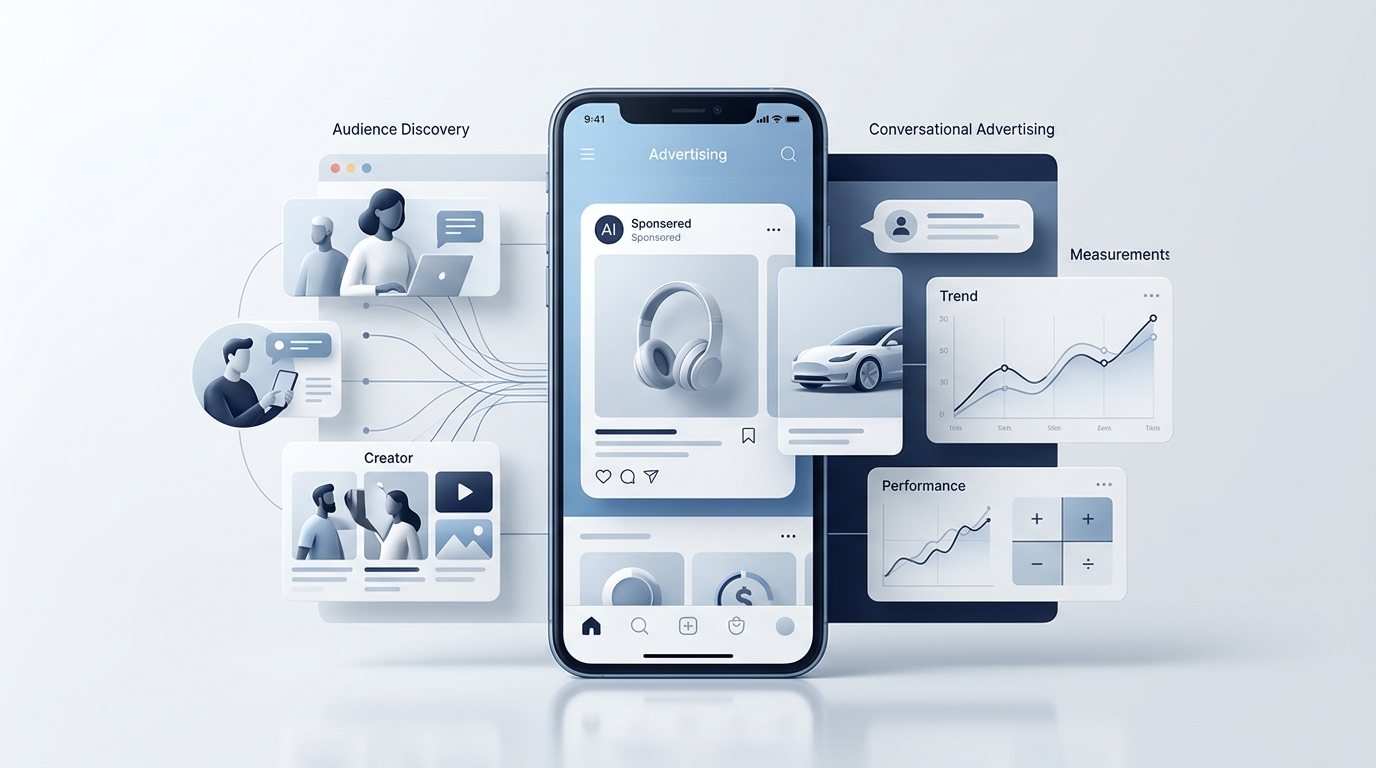
Digital advertising is entering a new phase. Artificial intelligence is taking on more campaign responsibilities, new advertising channels are emerging, and businesses are being challenged to rethink how they reach customers and measure marketing performance.
For years, digital advertising relied heavily on marketers manually selecting audiences, adjusting budgets, managing placements and monitoring campaign results. Advertising platforms have gradually automated many of these tasks. Now, AI-powered systems are beginning to handle more complex activities, including campaign creation, lead qualification, product recommendations and purchasing experiences.
At the same time, conversational AI platforms are opening new advertising opportunities, while developments in connected television, retail media and mobile entertainment are creating additional ways for brands to reach consumers.
These changes are not limited to large international companies. As advertising technology becomes more accessible, businesses of different sizes will need to understand how these developments could affect their marketing strategies.
Here are six important digital marketing trends businesses should pay attention to as 2026 progresses.
1. AI Is Taking on More of the Digital Advertising Process
One of the most significant changes in digital advertising is the growing role of artificial intelligence in campaign management.
Advertising platforms are increasingly introducing tools that can automate tasks previously handled by marketing teams. These include audience discovery, campaign creation, budget allocation, creative selection and performance optimization.
TikTok demonstrated this direction during Advertising Week New York in October 2026, when it announced several AI-powered advertising capabilities.
Among the developments were Shopping Assistant, which helps users discover and evaluate products through conversational interactions, and Agentic Leads, designed to help businesses capture and qualify potential customers through AI-guided conversations.
TikTok also introduced Buy Direct, an in-app purchasing experience that allows users to complete supported transactions without leaving the platform.
Meta is exploring similar capabilities through its AI Ads Manager assistant, which can help advertisers create campaigns and make adjustments using natural-language instructions, subject to advertiser approval.
These developments point toward a future in which advertising systems can manage more of the operational work involved in running campaigns.
However, automation does not mean businesses should surrender control of their marketing decisions.
Companies still need to determine who they want to reach, what they want to communicate, how much they can afford to spend and what constitutes a successful campaign.
AI can help execute a strategy, but it cannot independently decide what is best for every business.
The most effective approach is to use automation for repetitive and data-intensive tasks while retaining human oversight of important decisions.
2. Conversational AI Is Becoming Another Advertising Channel
Advertising is gradually moving beyond traditional search engines, social networks and websites.
As more people use conversational AI tools to research products, compare services and explore purchasing decisions, these platforms are creating new opportunities for businesses to reach potential customers.
OpenAI announced on September 23, 2026, that ChatGPT Ads would begin expanding into Indonesia, Malaysia, the Philippines, Singapore, Thailand, Vietnam and Taiwan.
The expansion brought advertising access to additional markets across Asia, building on earlier launches in the region. OpenAI said ChatGPT Ads were available in more than 60 countries following the expansion.
This development is significant because conversational AI creates a different kind of advertising environment.
Traditional digital advertisements are often presented while someone browses a website, watches a video or scrolls through a social media feed.
Conversational AI platforms can introduce advertising while users are actively researching a subject or considering different options.
For example, someone asking an AI assistant to compare business software may be exploring solutions with a specific purpose in mind. A relevant advertisement could introduce a product or service during that discovery process.
However, this does not mean every business should immediately move its advertising budget into AI platforms.
New advertising channels need to be evaluated based on audience relevance, cost, conversion quality and measurable business outcomes.
Businesses should also consider regional availability. An advertising product available in one country may not yet be accessible in another, and campaign performance can differ considerably across markets.
The opportunity is worth watching, but companies should approach it through careful testing rather than assumptions about future performance.
3. Advertising Measurement Is Becoming More Important
As businesses invest in more advertising platforms and formats, understanding what actually works is becoming increasingly important.
A campaign can generate millions of impressions, thousands of clicks and impressive engagement figures without necessarily producing meaningful business results.
This is particularly important in retail media and connected television advertising.
Retail media involves advertising through retailer-owned platforms, including websites, shopping applications and other digital channels. Connected TV, commonly known as CTV, refers to television content delivered through internet-connected devices and streaming services.
Both areas offer opportunities for brands to reach audiences, but measuring their performance consistently can be challenging.
In October 2026, IAB Europe published its final Connected TV Measurement Framework and Transparency Principles. The framework establishes common measurement definitions and expectations for reporting CTV advertising performance.
It covers areas such as ad delivery, invalid traffic, viewability, audience exposure, video completion, conversions and return on advertising spend.
The framework also emphasizes the importance of disclosing measurement limitations and explaining how reported results are calculated.
For businesses, the wider lesson is straightforward: advertising reports should provide enough information to support informed decisions.
A platform reporting a strong return on ad spend does not automatically prove that the campaign generated additional sales that would not otherwise have occurred.
Companies should understand how conversions are attributed, whether multiple advertising channels contributed to the result and whether the reported performance reflects actual business growth.
Before investing in an advertising campaign, businesses should establish clear objectives and agree on how success will be measured.
This helps prevent marketing teams from focusing on attractive statistics that have little connection to revenue.
4. Creator Partnerships Are Becoming More Important in Seasonal Marketing
Influencer and creator marketing continue to play an important role in digital advertising, particularly during major shopping seasons and cultural events.
Brands are increasingly combining creator partnerships with performance advertising to reach consumers and encourage purchases.
This approach is particularly visible in India's festive advertising season, where major shopping events create intense competition for consumer attention.
E-commerce platforms such as Amazon and Flipkart run large promotional campaigns, while creators introduce products, share recommendations and help brands become part of relevant consumer conversations.
The combination of creator content and paid advertising can serve different purposes.
Creators can introduce products through content that feels native to their communities, while performance campaigns help brands reach additional audiences and encourage specific actions.
However, businesses should avoid judging creator partnerships exclusively by views, follower counts or likes.
A creator with a smaller but highly relevant audience may deliver more valuable customers than someone with a much larger following.
Brands should evaluate audience relevance, engagement quality, content credibility and the ability to influence purchasing decisions.
They should also establish clear objectives before entering a partnership.
For some businesses, the priority may be brand awareness. For others, it may be website visits, qualified enquiries, purchases or customer acquisition.
The best partnerships are those in which the creator's audience and the company's marketing objectives genuinely align.
5. Cultural Relevance Is Becoming a Powerful Branding Strategy
As businesses expand into different markets, adapting marketing campaigns to local cultures and consumer behaviour is becoming increasingly important.
A campaign that works in one country may not produce the same response somewhere else.
Language, traditions, celebrations, purchasing habits and cultural expectations all influence how people respond to brands.
Luxury marketing provides a useful example.
During the 2026 Diwali season, Chanel developed dedicated festive beauty and fragrance communications for the Indian market. Its campaign featured Ananya Panday, who had previously been appointed the brand's Indian ambassador.
The approach demonstrates how an international brand can connect with a local cultural moment while maintaining its established identity.
This is an important distinction.
Successful localization does not require a business to abandon its brand identity or change everything about its products. It involves presenting the brand in a way that feels relevant to the audience it wants to reach.
For businesses operating across multiple regions, this could mean adapting campaign language, visuals, promotional messages, product presentations and seasonal content.
Companies should also avoid treating cultural localization as a superficial exercise.
Using local colours or mentioning a popular celebration is not enough. Marketing should demonstrate an actual understanding of the audience, its preferences and the context in which the campaign will appear.
Brands that get this right have an opportunity to create stronger emotional connections with customers.
6. Short-Form Entertainment Is Creating New Advertising Opportunities
The competition for consumer attention is encouraging brands to explore new content formats.
One development attracting interest in parts of Asia is the rise of mobile-first micro-dramas.
Micro-dramas are short, episodic video stories designed primarily for mobile viewing. They often use vertical video formats and deliver entertainment through multiple brief episodes.
Unlike a conventional advertisement that interrupts a viewer's experience, a sponsored micro-drama can integrate a brand into a broader storyline.
This gives advertisers an opportunity to associate their products or services with entertainment rather than relying entirely on direct promotional messages.
In Singapore, SPH Media began releasing CONNECTED, a 24-episode horror-comedy sponsored by Singtel, in October 2026.
The series draws on Singaporean folklore and is distributed through SPH Media properties and Singtel's social channels.
India has also seen developments in this area, with the India Today Group announcing Life Tak, a mobile-first micro-drama platform.
For advertisers, the attraction is the possibility of creating repeated engagement.
Instead of showing someone a single promotional message, a brand can become part of a story that gives viewers a reason to return for subsequent episodes.
However, the format is still developing, and businesses should evaluate whether it suits their audience and marketing objectives before committing significant resources.
Useful performance indicators could include episode completion rates, repeat viewing, audience engagement, brand recognition and the commercial impact of the sponsorship.
The broader lesson is that businesses should remain open to new ways of communicating with audiences, especially as mobile video consumption continues to influence digital marketing.
What These Trends Mean for Businesses
Although these six developments cover different areas of advertising, they share a common theme.
Marketing is becoming increasingly automated, more data-driven and more closely connected to the way people discover and purchase products.
Businesses will have access to more tools and advertising opportunities, but having access to technology does not automatically create an effective marketing strategy.
Companies need to understand which developments are relevant to their audiences and which ones can produce measurable value.
Here are five practical steps businesses can take.
1. Identify where AI can improve your marketing operations
Review repetitive tasks such as campaign reporting, audience analysis, content variations and lead qualification. Consider where automation can save time without compromising quality or control.
2. Improve the quality of your customer data
Marketing systems depend on the information they receive. Make sure customer records, conversion tracking, website analytics and campaign events are accurate and properly configured.
3. Develop stronger creative content
Technology can help businesses produce more advertising variations, but the underlying message still matters. Invest in creative ideas that explain the value of your products and give people a reason to pay attention.
4. Measure results beyond clicks and impressions
Monitor qualified leads, actual sales, customer acquisition costs, repeat purchases and revenue. Use these results to determine whether your advertising investment is producing meaningful outcomes.
5. Test new channels carefully
Explore emerging advertising platforms and formats when they make sense for your audience. Start with clear objectives, manageable budgets and measurable experiments before expanding investment.
The Future of Digital Advertising Will Depend on Better Decisions
The advertising industry is changing quickly.
AI systems are becoming more capable of managing campaigns, conversational platforms are creating new advertising opportunities, and emerging formats are changing how brands communicate with consumers.
Yet the fundamentals of effective marketing remain important.
Businesses still need to understand their customers, communicate a compelling value proposition, build trust and provide products or services that deliver on their promises.
Technology can make advertising faster and more sophisticated, but it cannot replace a clear business strategy.
The companies most likely to benefit from these developments will be those that combine intelligent automation with creative thinking, reliable data and careful measurement.
The future of advertising is not simply about allowing AI to do more. It is about using technology to make better marketing decisions and creating stronger connections with the people businesses want to reach.
Social Media in 2026: How Businesses Can Turn Content Into Real Growth
Next Dispatch →Why Your Business Needs More Than Paid Ads: The Importance of Brand Marketing
Discussion (0)
Technical commentaryLeave a Reply
No comments yet. Be the first to share your thoughts!