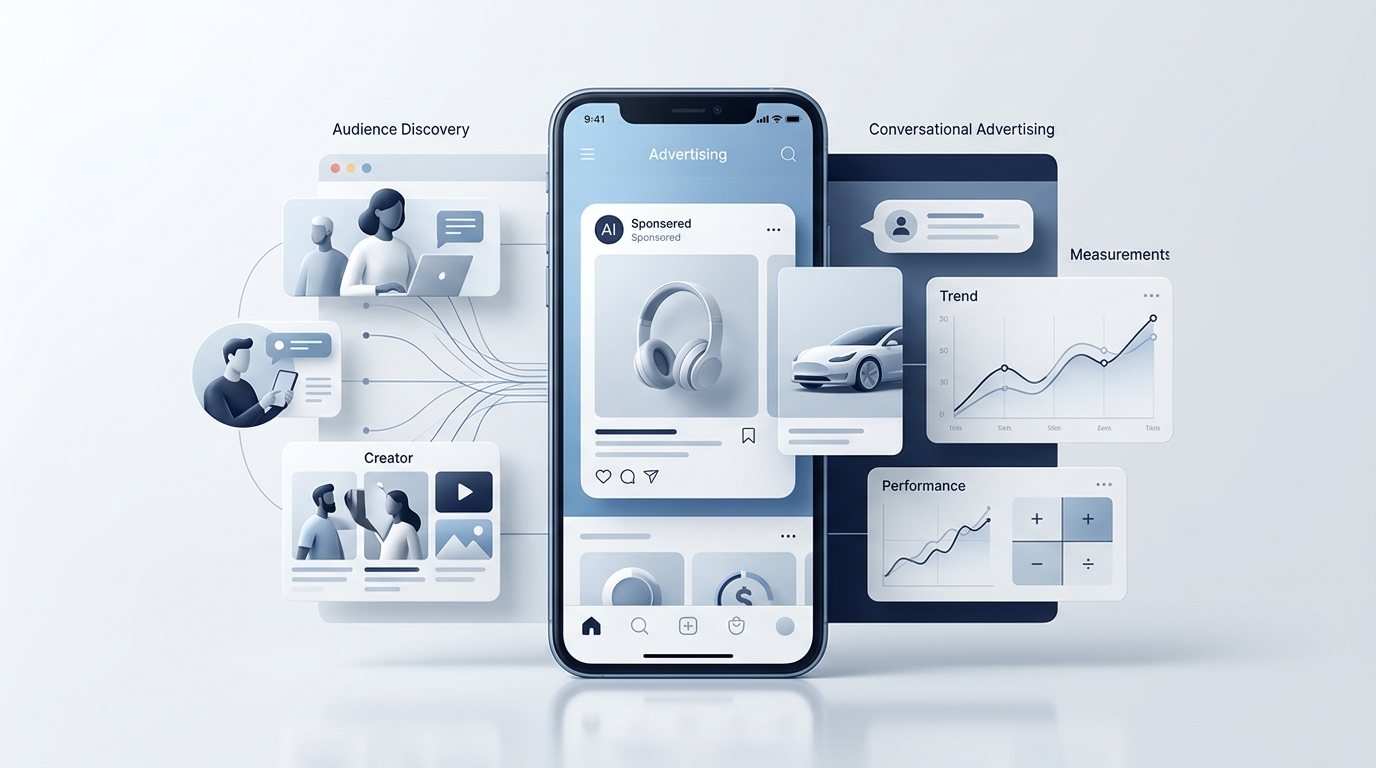
Social Media in 2026: How Businesses Can Turn Content Into Real Growth
Social media marketing is changing as platforms become search engines, shopping destinations and customer service channels. Discover the biggest social media trends in 2026, from short-form video and AI-powered content to influencer marketing and online communities, and learn how businesses can use them to attract customers and grow their brands.

Social media has become one of the most important channels through which businesses attract attention, build relationships and reach potential customers. But the way people use these platforms is changing, and companies that continue relying on outdated strategies may struggle to remain visible.
A few years ago, growing a business account often meant publishing regularly, collecting followers and trying to generate as many likes as possible. Today, those activities alone are not enough.
Consumers increasingly use platforms such as Instagram, TikTok, YouTube and Facebook to discover products, research companies, compare recommendations and communicate directly with brands. Social media is becoming part of the entire customer journey, from the first discovery to the final purchase and the support that follows.
At the same time, artificial intelligence is changing how marketers create content, while short-form video, creator partnerships and online communities are influencing how brands connect with their audiences.
For businesses, the challenge is no longer simply to be active on social media. It is to understand what audiences want, create content worth engaging with and turn that attention into meaningful business results.
Social Media Is Moving Beyond Followers and Likes
One of the biggest changes in social media is the way platforms distribute content.
Historically, a brand's reach was closely associated with the number of followers it had. Businesses worked hard to grow their audiences because followers were a major route through which their posts reached people.
That relationship has become less predictable.
Platforms increasingly recommend content based on users' interests, viewing habits and interactions. This means someone who has never followed a business can still discover its content through recommendation feeds, suggested videos and platform searches.
A smaller account can therefore reach people outside its existing audience when its content is relevant and engaging.
This changes how businesses should approach growth.
Instead of focusing exclusively on follower counts, companies should pay closer attention to reach, shares, saves, meaningful comments, profile visits, enquiries and conversions.
A post that reaches fewer people but attracts potential customers can be more valuable than one that generates thousands of views without producing any meaningful engagement.
The objective should be to build an audience that is genuinely interested in what the business offers.
Social Media Is Becoming a Search Engine
People no longer rely exclusively on traditional search engines when looking for information, products and services.
Many users now search directly within social platforms. They may look for restaurant recommendations on TikTok, compare products through Instagram videos, watch YouTube reviews or ask their communities for suggestions.
This behaviour is particularly relevant to younger consumers, who are increasingly comfortable using social platforms as discovery tools.
HubSpot's 2026 social media coverage identifies social search as one of the major developments influencing how brands reach potential customers. Its research also points to the importance of making social content easier to discover through relevant keywords and useful information.
For businesses, this means social media content needs to be searchable, not just visually attractive.
A company publishing a video about website development, for example, should consider the actual questions potential customers might enter into a platform's search bar.
Rather than using a vague caption such as "Another successful project," a more useful approach might be:
"How much does a professional business website cost?"
The video can then explain the factors that influence website development costs, while its caption and on-screen text reinforce the subject.
Businesses should pay attention to:
- Relevant keywords in captions and descriptions.
- Clear text overlays that explain what a video is about.
- Spoken explanations that address specific questions.
- Descriptive titles for videos and educational content.
- Hashtags that genuinely relate to the topic.
- Consistent information about the business and its services.
The goal is to make it easier for the right people to find relevant content when they are actively looking for answers.
Short-Form Video Remains a Major Growth Opportunity
Short-form video continues to play a central role in social media marketing.
Instagram Reels, TikTok and YouTube Shorts have created opportunities for businesses to communicate ideas quickly, demonstrate products, answer questions and reach audiences beyond their existing followers.
HubSpot's 2026 State of Marketing data found that 60% of marketers use short-form video, making it the most-used content format in its research. The report also identified it as the format most frequently associated with strong marketing returns.
The appeal is understandable. A short video can demonstrate a product, explain a service or tell a story in a way that is often easier to consume than a long block of text.
However, businesses should not assume that every video needs to follow the latest viral trend.
Useful formats include:
Educational videos: Explain a common problem, share practical advice or answer a question customers frequently ask.
Product demonstrations: Show how a product works and what makes it useful.
Behind-the-scenes content: Give audiences a closer look at the people, processes and work behind a business.
Customer experiences: Share genuine testimonials, case studies and customer stories with appropriate permission.
Myth-versus-fact videos: Correct common misconceptions within an industry.
Short business insights: Break down a complex subject into a simple explanation that viewers can understand quickly.
Production quality matters, but it should not become an excuse for failing to publish useful content. A clear message, good audio, appropriate lighting and a relevant idea can be more effective than an expensive production that has little value to its audience.
Authenticity Is Becoming More Important Than Perfect Production
As more businesses adopt AI tools and automated content workflows, social platforms are becoming increasingly crowded with similar-looking posts, generic captions and repetitive videos.
This creates a challenge for brands trying to stand out.
HubSpot's 2026 research found that 76% of surveyed marketers believe authentic content performs better than highly produced content. The finding points to a broader shift in audience expectations: people want content that feels relevant, genuine and connected to real experiences.
Authenticity does not mean abandoning professional standards.
It means showing the real value behind a business rather than presenting an unrealistic image of perfection.
For example, a technology company could explain how it solves a common business problem, show part of its development process, share a genuine customer success story or introduce the thinking behind a particular service.
These types of content give audiences a better understanding of what the company actually does.
Businesses should avoid publishing content simply because it looks impressive. Every post should have a purpose, whether that is educating an audience, answering a question, building trust or encouraging a useful next step.
AI Is Changing How Businesses Create Social Media Content
Artificial intelligence has become an increasingly important part of modern marketing.
Businesses and marketing teams now use AI tools to brainstorm content ideas, develop captions, generate graphics, edit videos, analyze audience behaviour and improve campaign workflows.
HubSpot's 2026 social media research reports that 73% of surveyed marketers use generative AI tools to create social content. It also highlights how AI is being applied to images, short-form videos, infographics and written copy.
For smaller businesses, these tools can help reduce the time and resources required to maintain a consistent online presence.
A small marketing team, for example, can use AI to develop a month's worth of content ideas, create initial caption drafts, organize campaign themes and assist with visual production.
But there is an important distinction between using AI to improve content creation and allowing it to replace the thinking behind a marketing strategy.
Publishing large quantities of generic AI-generated content can make a brand appear repetitive and disconnected from its audience.
AI should support the creative process, not determine the entire identity of a business.
Companies still need to provide original ideas, real expertise, accurate information and a recognizable brand voice.
The strongest approach is to combine the efficiency of AI with human judgement and creativity.
Influencer Marketing Is Shifting Toward Smaller, More Relevant Creators
Influencer marketing is also evolving.
Large celebrities and creators with millions of followers can still provide significant exposure, but businesses are increasingly paying attention to smaller creators with more focused audiences.
These creators often operate within specific communities or industries. Their followers may be interested in a particular subject, product category or lifestyle, making their recommendations relevant to a clearly defined audience.
HubSpot's 2026 State of Marketing research identified micro-influencers as the most successful influencer tier for the largest share of marketers in its survey, with 32% selecting them as their top-performing tier.
The benefit is not simply that smaller creators cost less. It is that a relevant audience can sometimes be more valuable than a much larger but less targeted one.
A software company, for example, might benefit more from partnering with a respected technology educator whose audience consists of business owners than from paying for a general entertainment personality with a much larger following.
Businesses considering creator partnerships should evaluate:
- Whether the creator's audience matches their target customers.
- The quality of the creator's engagement.
- The relevance of previous sponsored content.
- The creator's credibility within their niche.
- Whether the partnership supports a measurable marketing objective.
Follower count should be one consideration, not the entire decision.
Social Media Is Becoming a Customer Service Channel
Social media is no longer only a place where companies publish promotional messages.
Customers increasingly expect businesses to respond to questions, complaints and requests through comments and direct messages.
For many people, sending a message to a company's Instagram or Facebook account is easier than searching for a support email or navigating a website.
This creates an opportunity for businesses to improve customer relationships, but it also introduces new responsibilities.
A company that receives enquiries through social media needs a process for managing them. Messages should not remain unanswered for days, and customer complaints should not be ignored simply because they appear in a public comment section.
HubSpot's research identifies customer service as an increasingly important part of social media strategy, with many marketers expecting these platforms to become preferred channels for customer support.
Businesses should establish clear response procedures, define who handles incoming enquiries and know when an issue needs to be moved to a private support channel.
They should also protect customer information. Sensitive account details, payment information and personal data should never be requested publicly in comments.
When handled properly, social customer service can strengthen trust and help businesses understand the issues their customers experience.
Building a Community Can Be More Valuable Than Chasing Viral Posts
Viral content can attract significant attention, but attention does not automatically create customer loyalty.
A business may receive thousands of views from a popular post without building a lasting relationship with the people who watched it.
This is why community building is becoming an important part of social media strategy.
A community consists of people who regularly interact with a brand, share common interests or find value in the information and experiences it provides.
For businesses, this can take many forms:
- A group where customers can ask questions and exchange ideas.
- A professional community built around a particular industry.
- Regular educational content that encourages discussion.
- Customer stories and experiences that invite participation.
- Live sessions, workshops and online events.
- Consistent engagement with people who comment and ask questions.
HubSpot's 2026 research found that 85% of surveyed marketers consider building an active online community important to a successful social media strategy.
The value of a community extends beyond engagement statistics. It can provide customer feedback, encourage recommendations, strengthen relationships and help a business maintain contact with its audience even when platform algorithms change.
Businesses should think about how to create meaningful reasons for people to return, participate and stay connected.
Social Commerce Is Bringing Discovery and Purchasing Closer Together
Another important development is the growing connection between social media and online shopping.
Social commerce allows customers to discover products, evaluate recommendations and, where supported, complete purchases through social platforms.
This reduces the distance between seeing something interesting and taking action.
For example, a person watching a product demonstration may be able to access product information or a shopping link without leaving the platform.
HubSpot's 2026 research found that 69% of surveyed marketers expect more shopping to take place directly on social platforms than on brand websites or third-party marketplaces.
The availability of social shopping features varies by platform, country and business eligibility, but the broader direction is clear: social media is becoming more closely connected to the purchasing process.
Businesses should consider how their content can help customers move from discovery to decision.
This could involve product demonstrations, clear pricing information, useful comparisons, customer reviews and links to secure checkout pages.
For companies selling services rather than physical products, the equivalent may be a clear route from an educational post to a consultation request, enquiry form or booking page.
How Businesses Can Build a Stronger Social Media Strategy
Keeping up with every new platform feature and trend is not a practical strategy.
Businesses need a clear plan that connects their social media activity to their actual objectives.
Here are six steps worth prioritizing.
1. Understand your audience
Identify the people you want to reach, the problems they face, the platforms they use and the questions they frequently ask. Content should be built around audience needs rather than assumptions about what might go viral.
2. Choose the right platforms
A business does not need to be equally active everywhere. Focus on the platforms where potential customers are most likely to discover, evaluate and engage with your services.
3. Create content with a clear purpose
Develop a balanced content plan that includes education, brand awareness, service explanations, customer experiences and useful industry insights. Each post should support a specific objective.
4. Use AI strategically
Use AI to speed up research, planning and production, but review every output. Make sure the final content reflects the company's expertise, values and communication style.
5. Build relationships, not just reach
Respond to comments, answer enquiries, encourage useful discussions and give customers reasons to remain connected to the brand.
6. Measure business outcomes
Track more than likes and follower growth. Monitor profile visits, website traffic, enquiries, qualified leads, conversions and customer retention. Use the results to understand which activities deserve more investment.
The Future of Social Media Belongs to Businesses That Understand Their Audiences
Social media marketing is becoming more sophisticated, but the underlying principle remains straightforward: businesses need to give people a reason to pay attention.
Short-form video, social search, artificial intelligence, creator partnerships, social commerce and online communities are changing how companies reach potential customers.
However, adopting every trend is not the answer.
A business that understands its audience, communicates its value clearly and consistently publishes useful content is in a stronger position than one that simply follows whatever is popular at the moment.
The most effective social media strategy is not necessarily the one that produces the most posts or attracts the largest number of followers. It is the one that connects the right message with the right audience and creates a path toward a meaningful business relationship.
As social platforms continue to evolve, companies that combine technology, creativity and genuine customer understanding will be better positioned to turn online attention into long-term growth.
SEO Is Changing: How AI Search Is Reshaping the Way Customers Find Businesses
Next Dispatch →AI Is Changing Digital Advertising: 6 Marketing Trends Businesses Should Watch in 2026
Discussion (0)
Technical commentaryLeave a Reply
No comments yet. Be the first to share your thoughts!